Understanding African Americans in America society
The concept of Blackness as an identity, class, and object of degradation to its opposite whiteness, functions as an internal and external response to white supremacy. At America’s conception, the Black/African population shared one identity and class, while the ruling class of white Americans reveled in their newfound democracy. In law and society, African Americans were viewed as a subhuman labor force designed to fuel the economy ensuring white Americans achieved the “American Dream.” Political institutions and leaders led extensive public disinformation campaigns against African Americans to undermine coordinated community resistance and incentivize supticible conformists. Internally those racialized as Black were conditioned to believe they were intellectually inferior, undesirable, and undeserving of freedom. In lieu of systematic disenfranchisement, Black people concentrated their attention on the importance of education, social movements, and personhood. Throughout 4 generations post emancipation the external response to white supremacy has been to habitually expose the American political system’s artificial form of democracy. This counter tactic was utilized by both the older and younger generations of the Civil Rights Movement. The renowned radical and revolutionary thinkers of the Jim Crow era spurred massive movements encouraging the masses to understand and invigorate their Black identity. Counter campaigns were facilitated by strengthening protestors’ political literacy to effectively fight against racial apartheid. The radicals of this era understood resistance meant violence whether from the state or vigilant white supremacists.
A defining characteristic of Jim Crow is the institutional response to desegregating schools where white parents and school boards were in favor of closing schools rather than letting Black children learn. Black consciousness as a philosophy materialized into the movement to document how white supremacy exploits not only those who believe in the ideology but in which ways they will use disinformation to subjugate the Black identity. The conformists who opposed the Civil Rights Movement relied on anti-intellectualism as a preemptive set of actions to protect their class and social status. To segregationists, Black consciousness had to be delegitimized through restriction of African American history, intolerance of mass demonstrations, and appropriating elements of the Black identity. Anti-intellectualism is an easily accessible tool of white supremacy since it is encouraged to question the intellectual contribution of Black people. On the same token, it can be used to sprout distrust within Black communities specifically towards overtly militant campaigns targeting political institutions. The Civil Rights Movement seems to be an era far gone in comparison to contemporary African American social movements. This historical movement provides an idealized view of how dynamic social movements can evolve, however, anti-intellectualism obscures the uncomfortable reality of living in a racially hostile American society (Dawson,1994).
For instance, the Civil Rights Movement serves as a perfect example of how resistance in social movements can lead to tangible change, however, the movement also galvanized philosophical conversations in the Black community. Across all economic and social classes, the intellectual contributions of Black experts were enshrined into American society. As Black consciousness became an increasingly powerful force, the anti-intellectual structure of white society sought to delegitimize consciousness. Historically this ties in with the American political systems to create social determinants that conflate anti-intellectualism in the Black community, beginning with a denial of education. Due to the financial and political control institutions exert as an extension of the state, there are ongoing problems with how the philosophy of Black consciousness manifests outside of academic institutions. The philosophy found solace in HBCUs, social media, and lived experience that was motivated by the increase in Black experts.
The Function of Anti-Intellectualism in Social Movements
The evolution of Black consciousness as a political movement and philosophy posed a legitimate question about the meaning of “freedom” in American society. The Civil Rights Movement paved the way for Black Lives Matter and the next generation of activists. An increase in Black political power also meant increased reinforcement of white supremacy. At the base of the unsubstantiated claims of white supremacy, lies the framework of anti-intellectualism. In his seminal work, “Anti-intellectualism in American Life” Richard Hofstadter wrote of how intellectuals could be a driving force in American society. Hofstadter acknowledged that this concept has existed for decades and is not “very readily to the definition.”(Hofstafer, 1963). He instead generalizes individuals with this mindset, as what’s known as an anti-intellectual. In the context of this research, I will refer to anti-intellectuals as reactionists since they are responding to social change. The formulation of these ideas is reflective of the “resentment and suspicion of the life of the mind and of those who are considered to represent; and a disposition constantly to minimize the value of that life” (Hofstafer, 1963). Hofstafer released this research during a pivotal time in the Civil Rights Movement, yet how anti-intellectualism affects social movements is undefined. His theory lacks perspective on how anti-intellectualism partly originates from anti-Black beliefs that Black people are inferior beings, incapable of comprehension.Racism at its core is an outlet of anti-intellectualism, stemming from the irrational fear of minorities unifying against white interests. One of the main components of anti-intellectualism is a “revolt from modernity.” In both paradigms, anti-intellectualism reinforces colonial practices that are antithetical to the sovereignty of Black Americans. Anti-intellectualism when studied in Hofstafer’s time overlaps with the nostalgic tenets of fascism rooted in American society. In the passage, he describes how the fundamentalist panic of the Klu Klux Klan, stems from a rejection of modernism. An Anti-intellectual movement such as the KKK intervened in institutions to maintain the oppression of African Americans. Hofstafer delineates their unwillingness to separate religious teachings from intellectual thought. Intellectuals pursuing higher education were regarded as sinners for following the word of man instead of god. Hofstafer attributed his distrust in the institution of education to the leaders responsible for its upkeep,” I believe ours is the only educational system in the world, vital segments of which have fallen into the hands of people who joyfully and militantly proclaim their hostility to intellect and their eagerness to identify with children who show the least intellectual promise” (Hofstafer, 1963). The crusades of violence committed by this, “authentic folk movement,” are a direct example of the attitudes used to justify the subjugation of Black people. It has been hypothesized that much of right-wing ideologies’ rigid opposition to change is rooted in the institution of religion. Materially, “the issues of the actual world are hence transformed into a spiritual armageddon, an ultimate reality, in which any reference to day-by-day actualities has the character of an allegorical illustration, and not of the empirical evidence that ordinary men offer for ordinary conclusions” (Hofstafer,1963).
This ideology is seamlessly integrated into the framework of white supremacy through the prejudiced attitudes constructed by American society. In his analysis of anti-intellectualism, he argues it is most pervasive in the: business, religious, political, and educational sectors of American life. He argues the decline of democratic values is due to the culture of cynicism imposed by reactionaries who sought to preserve the sanctity of these institutions. This counter-movement of reactionary thinkers cling to a heightened period of trust in white interests to be foremost in the racial hierarchy. The philosophy of anti-intellectual attitudes and ideas is fear-based and premeditated believing that a rise in political consciousness rationalizes violent retaliation. The suspicion of political activists arose because, “intellect is always on the move against something: some oppression, fraud, illusion, dogma, or interest is constantly falling under the scrutiny of the intellectual class and becoming the object of exposure, indignation, or ridicule” (Hofstafer, 1963). As an oppositional force to Black consciousness, a reactionist’s job is to create or express distrust in the philosophy used to understand the Black identity. In the context of Anti-intellectuals, “in other words, they do not necessarily look at things that are done by Blacks logically.” (Biko, 1978). The philosophy of Black consciousness was established as a counter-narrative to the subjugation Black Americans faced based on intelligence. Black social movements rejected assimilating into American society since a significant component of the Black identity has been oppressed through the structural implementation of white supremacy in institutional systems. The formation of one’s consciousness is largely influenced by their social or class status. Anti-intellectualism is easily spread among disenfranchised communities and unprotected classes of citizens who do not have the social or political power to challenge white supremacy. Reactionaries despised experts’ ability to critically analyze aspects of American life they were ignorant of or did not control (Hofstafer,1963). A power struggle between the ideological beliefs of White supremacy in white Americans unfailingly conflicts with the conscious mind of the Black identity.The philosophy of Black consciousness analyzes how liberation can be achieved through rejecting the notions of inferiority and embracing one’s Black identity to overcome oppression. Intellectual movements in contemporary times have advanced theories about race consciousness theories and African Americans’ trust in governmental institutions. The politicization and commercialization of the Black identity fostered an anti-intellectual view of the role of Black intellectuals. Furthermore, the observable climate surrounding anti-intellectualism has grown within American society and has had a tremendous impact on the development of Black intellectuals. Anti-intellectualism and Black consciousness are interconnected through the distrust of institutions which can be distinguished through the contributions of political activists in the modern age. The conflation of these two variables results in a polarizing relationship between critical race consciousness and the minimization of the intellectuals. In this analysis, I seek to explain how heightened levels of African American distrust in government disrupt the ideological foundation of Black consciousness. I will also explain how anti-intellectualism in Black spaces presents a unique challenge to intersectional black identities such as women, children, disabled, or members of the LGBTQ. This paper is to assess how African American ideas and attitudes towards the Black Lives Matter Movement changed the general public’s access to information.
Literature Review
The framework of anti-intellectualism in American society has critically shaped African Americans’ perception of the legitimacy of government institutions and democracy. As a self-proclaimed leader of democracy, America’s disenfranchisement of African Americans perpetuates the distrust of such values. Black Consciousness like anti-intellectualism focuses on the mind of the intellectual. Philosopher, Steve Biko, notably used Black consciousness to assess the apartheid regime in South Africa. In his book, “The Testimony Of Steve Biko: Black Consciousness in South Africa” Biko used his involvement in the South African intellectual movement to explore the extent of freedom in Black thought (Biko,1978). To him Black consciousness, “represented a liberation movement of the mind. A psychological revolution aimed at forging Black thought and feeling into an amalgam of Black pride and ultimately Black unity.” (Biko,1978). In this period the “few” intellectuals in the movement were able to illustrate their distrust of apartheid as an institution. Simultaneously Black revolutionaries in America cultivated their revolution of the mind to liberate themselves from the system of Jim Crow. In this context, the distrust in government is rooted in the racial structures and attitudes that constrain the liberation of the Black identity. Modern approaches to this philosophy of Black consciousness abridged early intellectual thought to simplify the evident impact of race in America. Post Civil Rights Movement, the philosophy of Black consciousness in a supposedly color-blind America posed many questions about the Black identity. The civil rights of Black people were constantly violated by post-Reagan institutional policies leading to an increase in police brutality. Mass incarceration, an increase in surveillance, and the AIDS/HIV epidemic tore millions of African American families apart. Political activists emphasized race consciousness ideologies like critical race theory (CRT) as a critique of legal systems. CRT asserts that there is an implicit racial bias in legal institutions that occurs due to the social construct of race. (Sawchuk,2021). Researchers during this time studied the role of race and its significance in Black people’s internal and external relationships.
In the early nineties, Michael C. Dawson proposed a race consciousness theory that discussed the attitudes of Black people navigating the race and class binary. He assesses here, how class consciousness in the Black community grew in response to exclusion from economic growth. While the Black middle class experienced a large influx in economically diverse labor, lower-class Black people weren’t as fortunate (Dawson,1994). Class through the lens of race consciousness is integral because “class will supersede race as the most politically salient factor for African Americans.” (Dawson,1994). When race appears to matter less the capital gain of individuals and the institutions are deemed as more important interests. Dawson the division in race and class to, “the salience of one’s racial identity, or any other group identity, is a function of the cognitive accessibility of information pertinent to that identity, and the fit of that identity with social reality.” (Dawson,1994). In the absence of race consciousness, intellectual ideas on class consciousness are largely dictated by the Black “mainstream bourgeoisie.” The structural economic control by White Americans led to responsibility unfairly falling on African Americans to work harder than racial barriers. For Biko, the philosophy of Black consciousness advised against accepting defeat by systemic circumstances and embracing Black unity (Biko,1978). In Dawson’s theory, unity functions similarly to the “linked fate” of African Americans. Race consciousness dictates most if all systems are indifferent to the Black plight, so it’s essential they “believe that their self-interests are linked to the interests of the race.” (Dawson,1994). Black people’s trust in themselves as a racial group and non-black people are measured by their unique racial experiences (Nunnally,2012). African Americans hold the least amount of trust among any group due to their historical backgrounds as American citizens. The deliberate actions taken by institutions and political representatives granted permission to counter-protesters to commit violence against them. Activists were frustrated with the apathy of their democratic society to end domestic terror toward them (Dawson,1994). External trust could not improve due to the habitual infringement on African Americans freedom. To reiterate this created a binary that would lead to formation of race consciousness or dissociation from racial actualities. A substantial component of African Americans’ trust is determined by social interactions. Discrimination based on skin color is a divisive tool created by white supremacy, however, Whites are not the only ones to propagate these ideas. The reactionary adoption of the dominant classes’ attitudes and ideas by Black people causes intraracial distrust. Intellectuals regardless of political affiliation or racial experiences are likely to become lax on the interests of their race once class mobility is accessible.
Three years before Dawson’s study, an 89-second video disturbed the African American community of Los Angeles.A bystander recorded LAPD officers striking Rodney G. King close to 56 times with their batons. This is one of the first instances of police brutality being captured by technological means. The justice system failed to protect the civil rights of a citizen which was a decision that cost them 1 billion in damages after riots ensued (History.com editors,2010). This pattern of police violence would needlessly end thousands of more lives and face resistance from the intellectuals of the 2000s. The race consciousness call to physically damage these institutions brought consequences for class control in white and Black communities. Shayla C. Nunnally’s, “Trust in Black America: Race, Discrimination, and Politics,” researched why disregarding race for economic prosperity does not protect against discrimination (Nunnally,2012). Economically the higher an African American’s income is the less likely they’re to hold negative views of white people. Conversely, “Black Americans with higher levels of black consciousness are more likely to attribute racial discrimination to whites than they are to blacks” (Caldwell and Jefferson 2002). In the case of discrimination, whites are the least trusted due to their intimate role and attitude towards race in America. The fear that race-conscious African Americans will dismantle exclusive white institutions defines the challenges facing political activists. Black activists are aware non-Black allies frequently weaponize this power dynamic consciously and subconsciously. This paradigm suffocates social and political spheres for Black citizens who try to partake in them. Trust about racial consciousness is vested in other members of the Black community. As a racially disadvantaged group, Black people trust Black leadership to effectively represent their interests in politics. This is in part due to our linked fate and distrust of non-Black political actors in positions of power, however, this results in an overall positive view of Black people (Nunnally,2012). Nunnally and Dawson’s review of race rationalizes the behavior of Black people in the socio-political Black Lives Matter Movement that unfolded in the early 2010s.
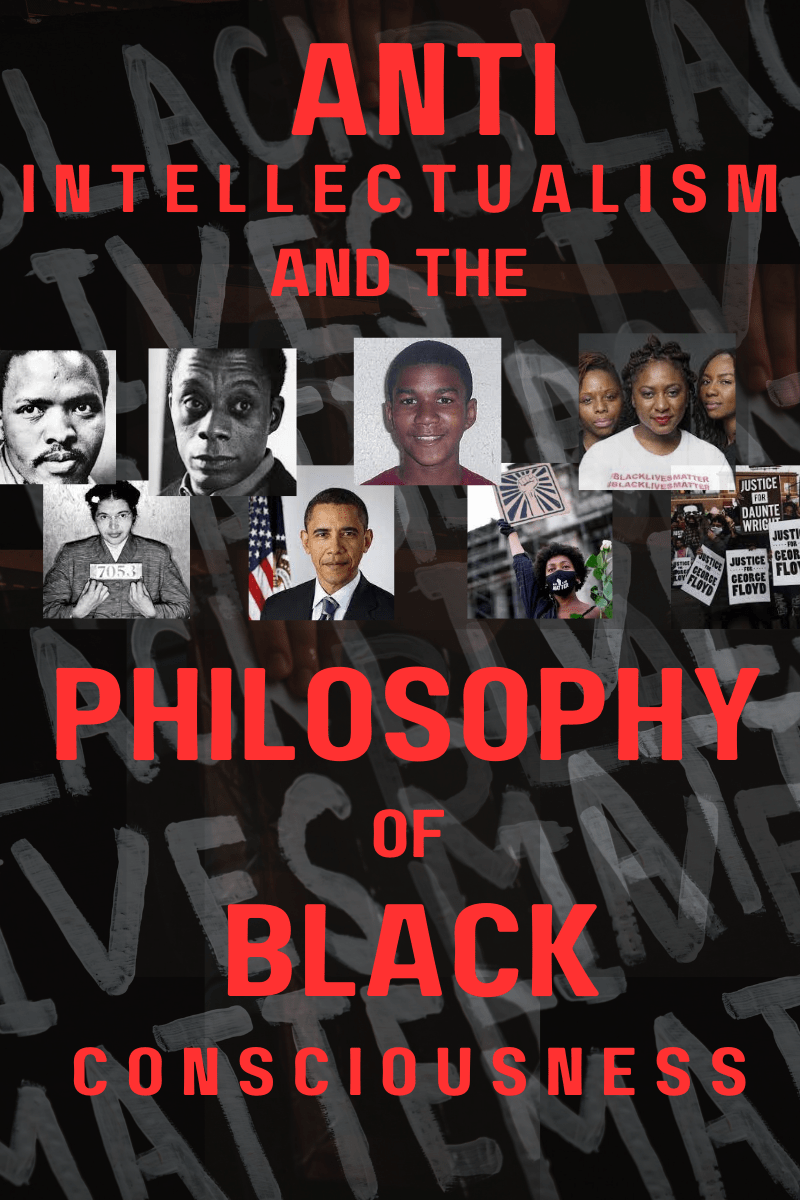
Months before Nunnally published her theory of how race discrimination and politics affected trust, racial tensions, and consciousness were raised in February. National headlines delivered generationally defining news of the political martyrdom of Trayvon Martin. For many young Black Americans, this was their first interaction with race consciousness. Older millennials and preteen Gen Z were old enough to coherently identify the racial bias exhibited by George Zimmerman firsthand. Social media provided extensive access to information about the historical context of the Black identity, which also shaped distrust in interactions with non-blacks (Nunnally,2012). These heightened feelings of distrust were the product of younger demographics being radicalized by the societal consequences of racial profiling. Black youths identified themselves with Trayvon Martin organizing their movement in the wake of his death. George Zimmerman defended his racially charged vigilantism because boys like Trayvon, “always get away.” Zimmerman was acquitted in 2013, which would become a defining moment gradually unifying and attracting members to Black Lives Matter. The verdict rattled Black communities across the nation, clarifying that there is no protection from white terror (Nunnally,2012). Thereafter unarmed victims were then subjected to insensitivity and racism to justify racial sacrifices made by African Americans. Trayvon became the backbone of the modern generation’s conviction for distrusting and challenging democratic values. The trust Zimmerman had in himself as a form of authority to commit violence is a reflection of how the state condones African Americans’ suffering. Black Americans were offered no recourse even under the control of a Black president. Obama reinforced the intention of institutions. He changed the landscape of political representation for black American interests, yet the material conditions worsened for lower-class African Americans. 2012 was some millennials first time casting a ballot, picking an African American president was presented as the focal point of the Black Lives Matter movement, which is the sacrifice democracy has used to preserve the institutional self-interests (Hooker,2016). There was widespread backlash to his administration for his proliferation of foreign and domestic policies that harmed Black people. Throughout Obama’s presidency, young minds of the Black Lives Matter Movement witnessed the lack of protection against police brutality. Policing permeates itself in the intimate relationships of Black people at the request of the state.The institutional extension of law enforcement normalizes the patrolling and surveillance of Black bodies. Whether overtly or subtly White people propagate their paranoia of being victimized by Blackness(Combs,2018). Preemptive measures taken by police have been instrumentally used to forcefully and legally sanction racial discrimination. Their presence and coddling of white fears conflict with Black people’s trust in institutions. Crime in the case of the Black intellectual are conspiracy to challenge authority. Furthermore, “any resistance to authority only heightens the presumption of criminality and justifies carceral response” (Combs,2018).
A new movement
In 2013, the #BlackLivesMatter Movement became its social movement, when activists began to use social media as a tool for social and political organizing. This grassroots movement started with a heartfelt letter posted To FaceBook by political activist Alicia Garza, one of the founders of the movement. Following the acquittal of Zimmerman Black communities constantly grieved the loss of Black life at the hands of law enforcement. These communities demanded that justice be served and those who intentionally harm Black lives be held accountable. Garza was joined by Patrisse Cullors and Opal Tometi; the three organizers cultivated a digital safe space where all Black identities could engage in consciousness. As the movement grew to millions online members of this new movement sought to humanize martyrs of police brutality. Political Experts and activists started massive campaigns to highlight the 1,180 Black people, including Trayvon who were unjustly murdered due to police violence under the Obama administration from 2012 to 2016 (“Mapping Police Violence” 2022). This framework placed civil rights at the forefront specifically to scrutinize racial discrimination in the American legal system (Chase,2018). Political violence towards one Black identity threatened all identities in public and private spaces. The policing of the Black body by institutions and counter-protesters is representative of the complex nature of anti-intellectualism operating in inclusive race-conscious frameworks (Combs,2018). Barbara Combs resea provides pivotal observations of how the need to police Black bodies is the basis for White resistance to social equality. Her theory explains that violence is used to remind Black People to stay in their place (Combs,2018). This is comparable to the way non-blacks and Blacks with internalized racism engage in vigilantism to socially control the Black identity.
Reactionaries weaponizing the police against Black bodies, invigorated young activists to find new ways to spread critical race theory. #BlackLivesMatter attracted an intergenerational domestic following as shared race consciousness theories among the community. Political activists reimagined the way African Americans could use social media to reach the digital masses. The use of hashtags and coordinated posts meant Black people could freely engage in social or political discourse for their shared interests. One could follow their intellectuals and share their thoughts on the intimate inconveniences of state-sanctioned violence (Combs,2018). On a micro level, intellectuals could gauge trust or distrust of race consciousness and participate on a macro level through demonstrations. Black people across the nation could now communicate faster and organically to build intellectual communities (Nunnally,2012). The campaign for this assertion of the modern Black conscious identity incited the rise of a new white terror organization. In conjunction with Trumpism, the Proud Boys rose in 2016 to promote the Western values of patriotism in America (Kriner and Lewis,2021). The aforementioned oppositional group’s Black consciousness seeks to dissolve trust and spread fear which is no different in today’s climate. Technological advances in the Black Lives Matter Movement brought a new fight against white supremacist rhetoric in digital spaces.
Seven years into the Black Lives Matter Movement emerged another crucial period of racial reckoning. May 25, 2020, Black citizens in-person and in digital spaces were exposed to the final moments of George Floyd’s life. News stations and social media accounts insistently shared the 9-minute 9-minute video of Officer Dereck Chauvin criminalizing and brutalizing George. In real time the depravity of racial oppression was immortalized in front of young teens and adults. Floyd’s martyrdom similar to Trayvon amassed millions of supporters in an era of isolation. Intellectuals began to spout the truisms of “defund the police” alongside the literal meaning of, “Black Lives Matter,” simplistically centering critical race theory. The Black working class came together, despite the rise in Black fatalities from the COVID-19 pandemic. Unintentionally the Black Lives Matter Movement fostered distrust in Black political authority. Expectantly Whites distrusted the rise of another intellectual movement, and self-identified Black independent thinkers did as well. Post George Floyd, the rejection of modernity Hofstadter details can be examined in the rise of Black anti-intellectualism. On the Macro level, Black anti-intellectuals took inspiration from the neoliberal interests of the Black bourgeois. The elevation of their class status is applauded by the working class as examples of, “Black excellence.” Black elites of the celebrity class and entrepreneurial middle class are revered for their economic prosperity. Their entertainment or services to the masses temporarily diminished the reality of their lower-class counterparts. Those of the neoliberal race consciousness wield their class to benefit from institutions that do not benefit the general interests of Black people. Black elites are intimately connected to the Black struggle through the exploitation of their racial identity. In the Black capitalist domain, the philosophy of Black consciousness is transmuted into capital. Capital is earned in exchange for the promotion of pseudo-intellectual individualism and anti-intellectualism in replacement of Black consciousness. A staple of Black consciousness in the Black Lives Matter Movement to center intersectional Black identities. These identities include: women, LGBTQA+, disabled, and children which have all been historically neglected in discussions about Black interests. Racism as stated is a form of anti-intellectualism, therefore the belief in gendered or eugenicist constructs that suppress Black consciousness are congruous. The exclusion of these identities by other Black people is rooted in the fundamental tenets of White supremacy. Internalizing negative stereotypes of one’s racial group alienates and complicates intercommunal relationships (Nunnally,2012).
Discrimination, such as colorism or futurism causes further distrust between intellectuals and anti-intellectuals (Nunnally,2012). In deciding how to interact with race, anti-intellectuals will project their Black identity by denying the interference of institutions and the construct of race in the modern day. This is observable in the destruction of physical spaces and the inaccessibility of information about Black consciousness (Dawson,1994). Anti-intellectualism is capable of believing in a linked fate for the elite or hetero-Black identity. A Black anti-intellectual foundation is a devotion to pseudo-Black nationalism. This ideology isn’t restricted to conservatives or Republicans, since anti-intellectualism is contingent on attitudes and ideas (Hofstafer,1963). Reactionary Black identities are suspicious of individuals who want to hold them accountable for rejecting or misrepresenting historical and present philosophies of Black consciousness. In the context of the Black Lives Matter Movement, anti-intellectuals declared, “All Lives Matter,” as a reactionary statement against asserting Black Lives Matter. A distasteful counterproductive argument that overlooks the sacrifices the Martyr has given for their freedom. Anti-intellectuals can also participate in violence against intersectional identities to exert social control. Power over a marginalized group means control of the Black identity and body. Appropriation of “Black Power,” ideology is counterproductive towards Black unity if all Black people are not included. Intellectuals need to be cognizant of their role in relaying information about the Black identity. Information in the digital age can lack critical assessment since such complex theories can be accessed to artificially or practically apply critical race theory. Casual engagement with the ideas and attitudes of Black identity can lead to followers cherry-picking particular messages to incorporate their own. Intellectuals expect to replicate the intellectual complexity of the civil rights movement in the Black Lives Matter movement without refinement. Distrust becomes a cycle in which anti-intellectuals are disenchanted by the empty promises of liberals. In general, intellectuals are aware of the social implications of race consciousness and accept the theory of linked fate. These two beliefs are corollary in trust deficiency when intellectuals and anti-intellectuals interact.
The Harm of Anti-intellectualism in Digital Spaces
Anti-intellectualism in Black spaces is a counterproductive response to the inclusion of intersectional Black identities within the Black community. Online and in the physical world Black Americans form communities through subgroups that best represent their identity. The rise of the #BlackLivesMatter Movement on social media increased its visibility, however, reactionists massively distorted the meaning of the core message. The worrisome reality is that anyone can assume an identity on the internet or express their contempt for Black people, even other Black people. Reactionists in digital subgroups pride themselves on restoring respectability to Black interests. This individualized approach primarily benefits and attracts Black men who want to lead and dictate community interests. The Black Lives Matter movement decentering cis-gendered Black men and uplifting women, children, disabled, and LGBTQ created distrust in Black political authority. Masculine dominance in the Civil Rights Movement is a prominent example of what Black men in the Manosphere are trying to emulate.
Anti-intellectualism thrives in the manosphere since it provides a space exclusively for Black men to express their fears of becoming an object of exposure, indignation, or ridicule. To cope with the racial actualities of the Black identity, Black men in this space will scornfully place the burden on Black women (Young,2022). Misogynistic homophobic and transphobic ideas and attitudes are allowed to exist in a vacuum to appeal to all age demographics of men. They’re resentful of Black women who argue for social equality through the framework of Black feminism. Black men share their grievances about the deterioration of Black relationships and families by reinforcing negative stereotypes about Black women (Young,2022). Reactionists in the “Red Pill” Black manosphere space align themselves closely with right-wing ideology while ignoring the exclusion they face in similar white subgroups. Rejecting intersectionality complicates reactionists’ ability to positively interact with movements such as Black Lives Matter and to a degree Black women. The Black manosphere is a point of contention in the development of new Black social movements. Anti-intellectuals obtain power and influence to sacrifice intersectional identities and blame them for causing division in the Black community. On the other hand, they disregard their role in contributing to the harm of marginalized Black identities. For Black women, this can be fatal because, “nonsensical perspectives on Black women are widely accepted as factual information which causes health issues and public safety consequences” (Onuoha,2022). Accounts with millions of followers share memes, tweets, or videos that punch down on marginalized identities in the Black community. Reactionists utilize social media tools across platforms to spread disinformation in allegiance to the status quo.
Disagreements about how social movements should operate aren’t a new phenomenon but false information about the Black identity is easily digestible by reactionists. DJ Vlad is a YouTube host who interviews rappers and personalities alike, has around five million followers and his content caters to his massive Black audience. In a 2016 interview with rapper Lord Jamar, when asked about the Black Lives Matter Movement, gave important insight into the attitudes of reactionists in digital spaces. In the interview, Dj Vlad asks Lord Jamar about the movement he refers to as “socially engineered,” while denying the presence of race. The movement came off as “inorganic,” due to its lack of leadership which he believes is the fault of the “two Black lesbians.”Jamar scoffs at the presumed legitimacy of the Black Lives Matter movement because of the absence of strong male figures such as “Marcus Garvey who was the founder of this all” (YouTube, 2016). The interesting part about this interview is not Lord Jamar’s disdain for the movement, but how disinformation on intersectional identities is not contested. Jamar applauds Garvey for his economic policies of circulating the Black dollar and in the same breath reiterates a white supremacist talking point about George Soros. Soros is a Jewish philanthropist who has given millions to the cause of the Black Lives Matter Movement which spurred antisemitic conspiracies from right-wingers. Jamar’s gripe with the Black Lives Matter movement is reflective of pseudo-Black nationalism that relies on toxic masculinity and homophobia (Jim,2021). He does not mention the role of race in the movement because disinformation is “never channeled into anger at systems like racism, colorism, classism, or fatphobia” (Young,2022).
I use Lord Jamar in my analysis of reactionary responses to Black consciousness because the integration of white supremacy language into mainstream Black consciousness has dire effects on marginalized identities. Reactionary attitudes and ideas from critics like Lord Jamar convey how disinformation about the intersectional Black identity is favorable. African Americans’ relationship with racial inequality is directly tied to the anti-intellectualism in our society. Institutional distrust is the core of Black consciousness, but anti-intellectualism corrodes intraracial trust in the Black community. This form of anti-intellectualism is blanketed by the typical assumption that these are just common conservative or republican ideas and attitudes. Though they are closely related in attitude the ideological reasoning of Black anti-intellectuals is fundamentally different. Anti-intellectualism in Black spaces arises from the division of class, the weaponization of one’s own Black identity, and the romanticization of vintage Black consciousness ideas. The aftermath is the misrepresentation of Black consciousness ideology that leads to pseudo-Black nationalism that does not represent all Black interests. The newfangled intersectional and inclusive framework in the Black Lives Matter Movement is a modern example of how anti-intellectualism works against race consciousness. The Black identity in American society has been significantly impacted by the projection of the Black identity in conjunction with white supremacy. The conflation of anti-intellectualism and Black consciousness has resulted in a polarizing relationship between critical race consciousness and the minimization of Black interests. I propose funding and research should be allocated to physical spaces in African American communities to educate on Black consciousness. Black consciousness is represented often because the educational resources related to the ideology are inaccessible. In physical spaces such as freedom schools or public libraries, Black intellectuals can facilitate conversation about social or political interests. I recommend Francine L. Allens, “The Bible Didn’t Say So: Ferguson, Charleston, and the Public Library’s Role in Critical Literacy and Social Justice,” to understand the role public libraries play in critical literacy. Public libraries are spaces where all Black identities can convene inside and outside to learn how to engage the rhetoric and language of Black consciousness. Tyrone C. Howard’s research in, “Why Black Lives (and Minds) Matter: Race, Freedom Schools & the Quest for Educational Equity,” could be used to practically address race consciousness and eliminate anti-intellectualism. This framework for educators would center on stimulating the “intellectual minds” of Black children through reducing racial punishment in schools. Howard’s proposal to examine and teach students how to approach race can lead to a decline in anti-intellectual ideas and attitudes for the youth of the Black Lives Matter Movement era.
 Writings for the apocalypse at the disco🪩